When to photograph a finished building, and when to render it anyway
The building is finished, so why would you render it? There are four situations where rendering still beats photography, and several where it does not.
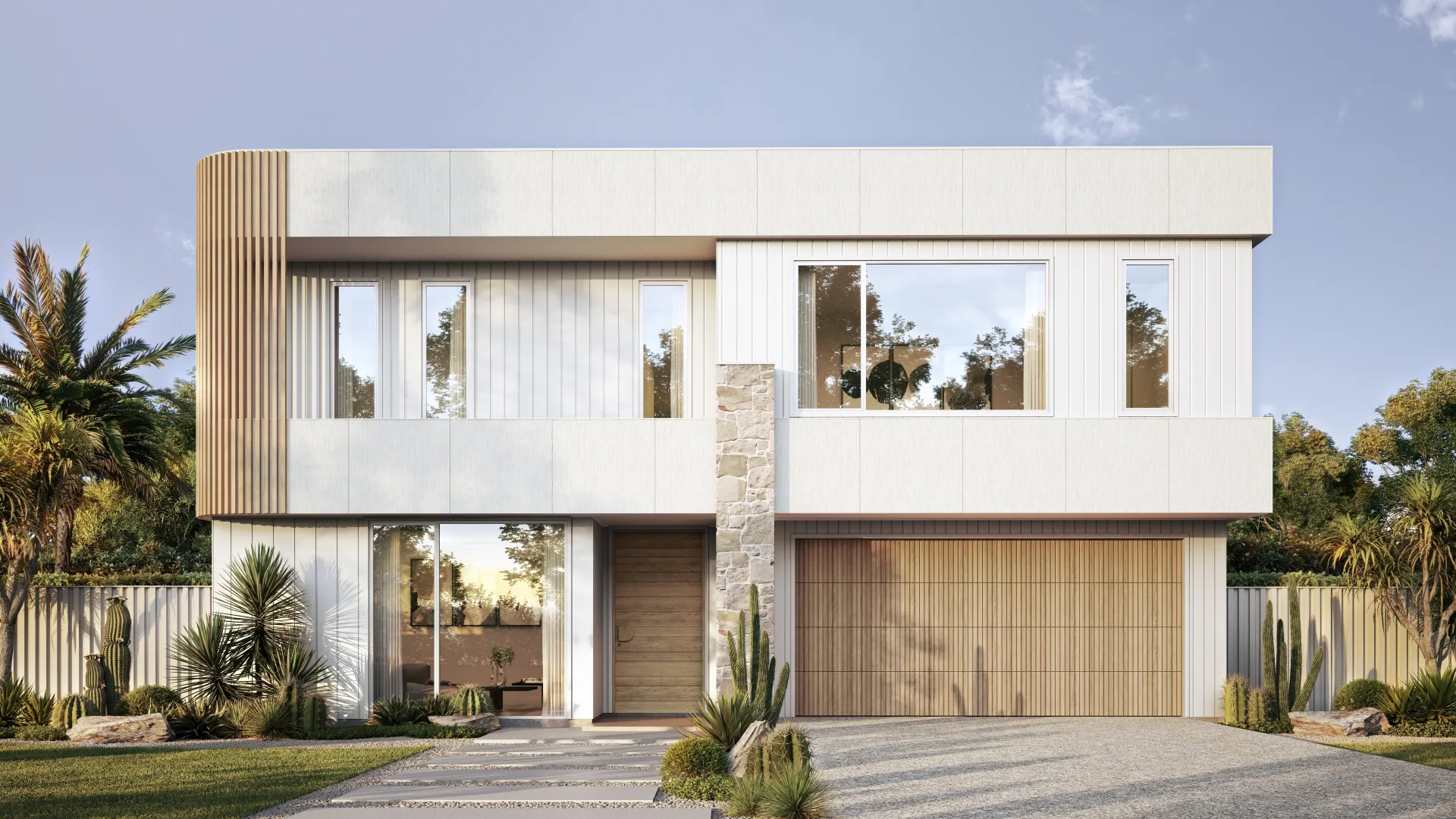
Once a building exists, photographing it is usually the right answer and the cheaper one. A good architectural photographer will produce a set in a day for less than a comparable set of renders, and the result carries an authority that no render quite matches, because everyone knows it is real.
So this article mostly argues against our own service. But there are four situations where rendering a completed building is the better decision, and they come up more often than people expect.
When photography wins
Start here, because it is the default and it should be.
The building is finished and accessible. Photograph it.
You need it to be credible above all. Photography is evidence. Renders are argument. For awards submissions of completed work, for case studies, for anything where a sceptical reader matters, the photograph wins on trust alone.
Budget is tight and the building is photogenic. A day of photography covering exterior, interior and detail will cost less than four or five premium renders and produce far more usable frames.
You want the building as it actually is. Including the things a render would have tidied away, which are frequently the things that make it feel inhabited.
When rendering wins anyway
1. The building exists but the interiors do not
Extremely common in residential development. The shell is complete, apartments are being sold off the plan, and the interiors are bare concrete. Photography of the exterior, renders for the interiors, all graded to match so the set reads as one campaign.
This is the single most common legitimate reason to render a real building.
2. You need conditions that do not exist
A photographer can only shoot what is there on the day. Rendering gives you the building at dusk with the interior lights on, with mature landscaping five years from now, with the adjacent stage built, or in the season that suits the campaign.
For a development marketed over three years, the landscape in the render is the landscape the buyer will eventually live in. The photograph shows saplings and bare soil.
3. The surroundings are wrong
The neighboring site is a construction zone. There are skip bins, scaffolding, parked utes and signage in every frame. This is reality for most recently completed projects, and it is genuinely difficult to photograph around.
A render shows the building in the context it was designed for rather than the context it happens to sit in this month.
4. You need alternatives of something already built
Facade upgrades, adaptive reuse, retrofit proposals, a color scheme change across a portfolio. You need the same building shown several ways. Photography gives you one version — the existing one, which is the version you are trying to change.
The hybrid nobody talks about enough
Photograph the building, render what is missing, grade them together.
Done properly this is invisible. Shoot the exterior, render the unfinished interiors, composite new landscaping into real photographs, and grade the whole set to a single look so nothing announces itself as different.
It is usually the cheapest route to a complete campaign, because you are only paying to create what does not exist and photographing everything that does. Most studios will not propose it because it means selling you less rendering, which is a reasonable reason to be suspicious of anyone who does not mention it.
A question that settles it quickly
Does the thing you need to show exist right now, and can you point a camera at it?
- Yes, and it looks right → photograph it
- Yes, but the surroundings ruin it → render, or composite
- Partly — shell done, interiors not → hybrid
- No, or not yet, or not in that configuration → render
One thing worth saying plainly
A render of a completed building should not be passed off as a photograph. Not for legal reasons in most cases, but because buyers who visit and find the landscaping is a decade from the render’s version remember that, and they tell people.
Where imagery shows a future state — mature planting, a later stage, an interior not yet fitted — say so. It costs you nothing, it protects you, and the honest version sells about as well.
We do both, and we will tell you when a photographer would serve you better. If your project is the hybrid case — building up, interiors not — that is squarely what we are for. Send us the drawings.